Key Fob Battery Replacement
How to tell if your key fob battery is dying, which battery it takes, how to change it without breaking the case, and when the problem isn't the battery.
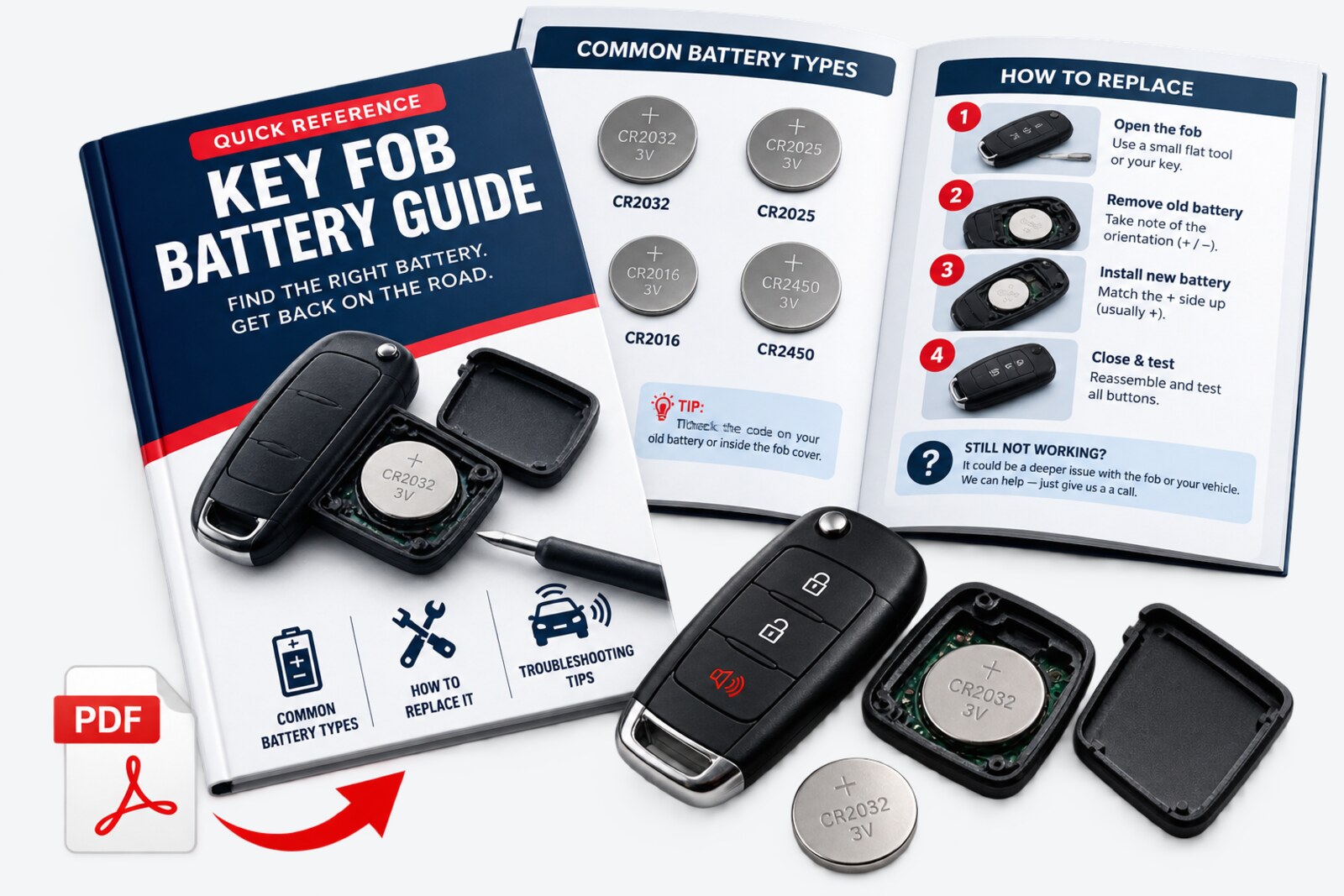
Keep this guide. Save it to your glovebox — hit print, then choose Save as PDF as the destination.
Which battery does your fob take?
Almost all use a coin cell. They look nearly identical and differ mainly in thickness, so the number matters — open the fob and read the old one.
CR2032
3V · thickest, most common
CR2025
3V · medium
CR2016
3V · thinnest
CR2450
3V · large, some fobs
How to replace it, step by step
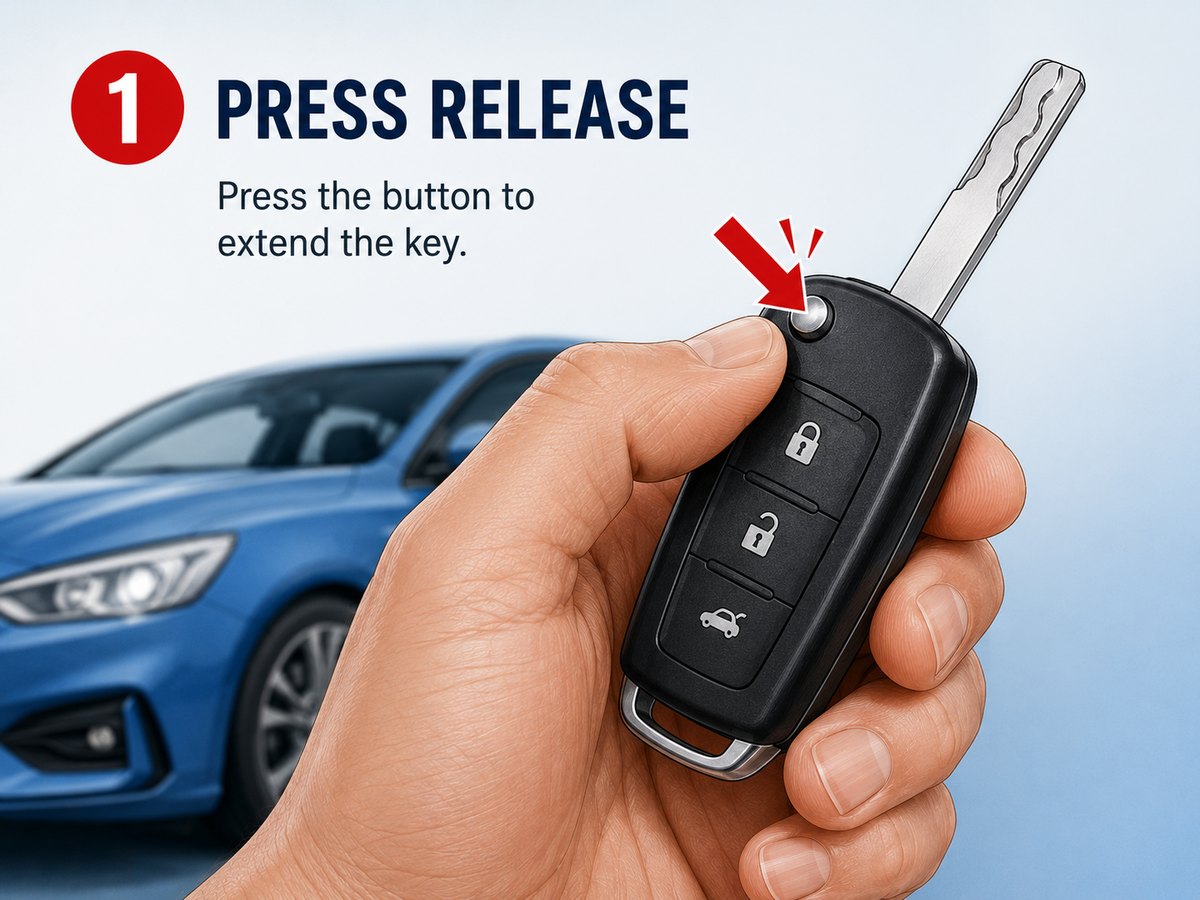
- 1
Press release.
Press the button to pop the metal blade out — it makes the case easier to hold and open.
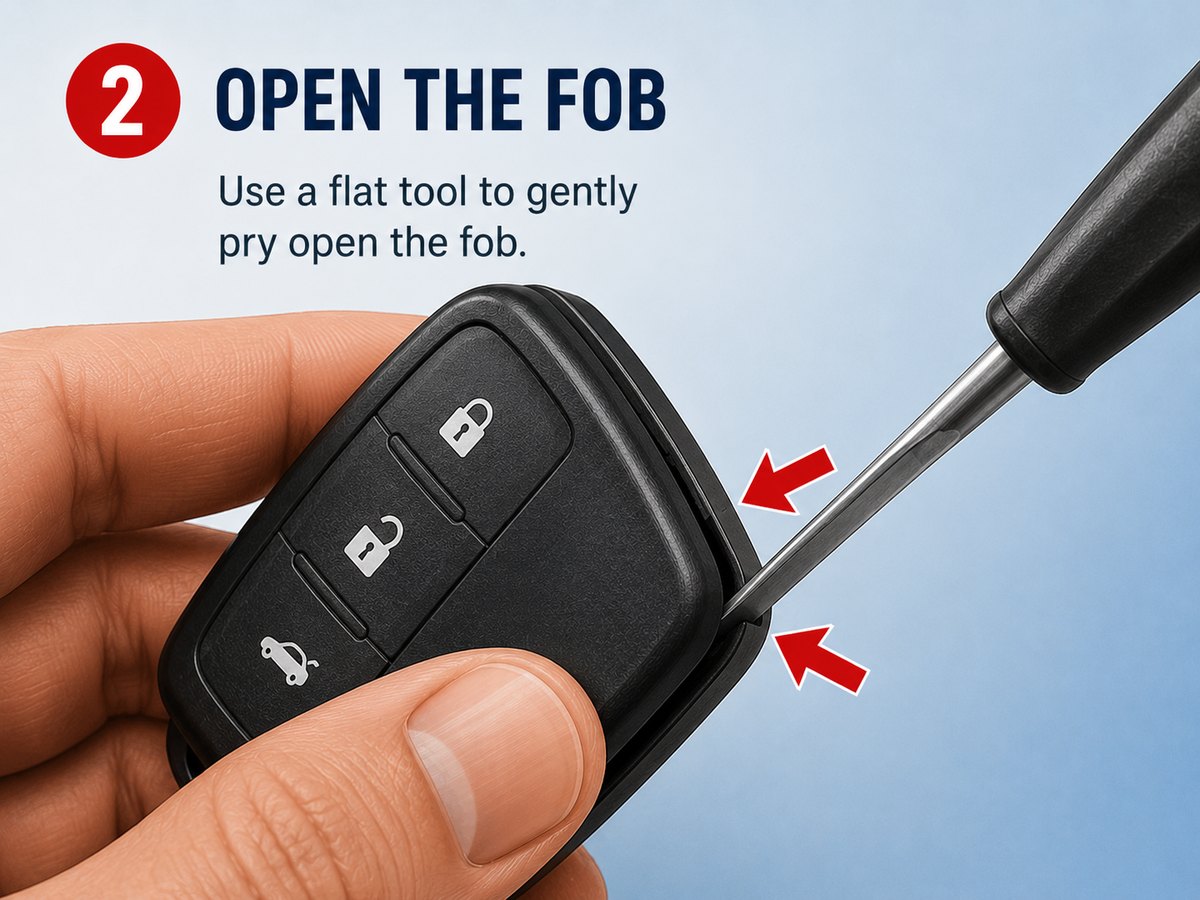
- 2
Open the fob.
Gently pry the two halves apart at the seam with a flat tool. Check for a hidden screw first — some hide one under a sticker or badge.
- 3
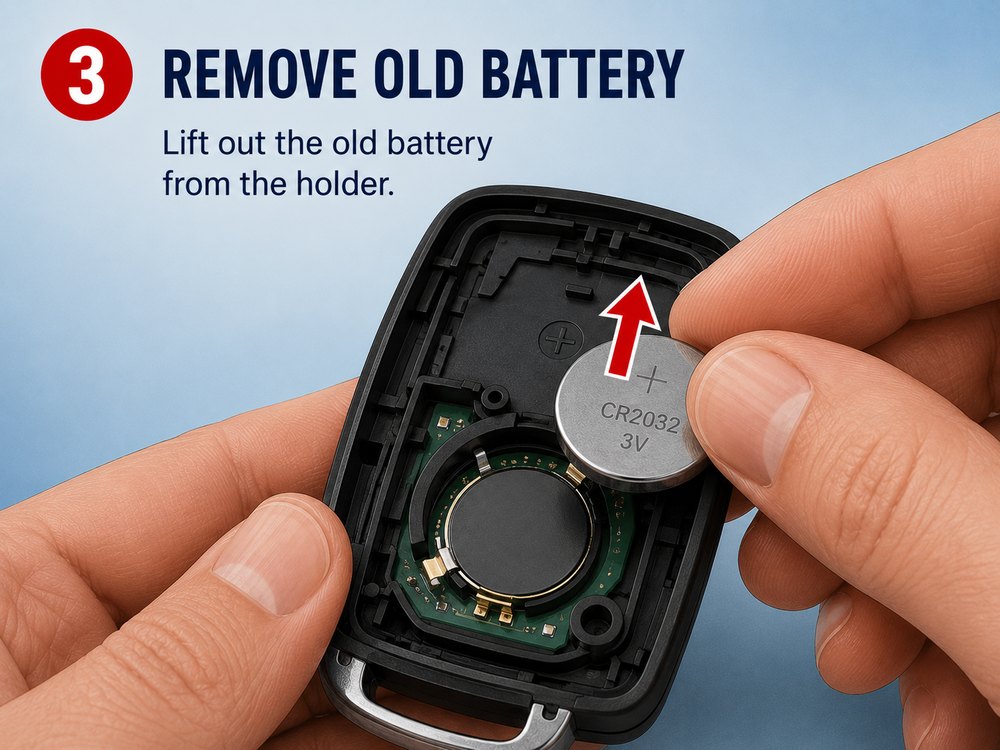
Remove the old battery.
Lift the coin cell out of the holder. Note which way up it sits (printed + side up) and read the number on it — usually CR2032, CR2025 or CR2016. Keep it away from children.
- 4
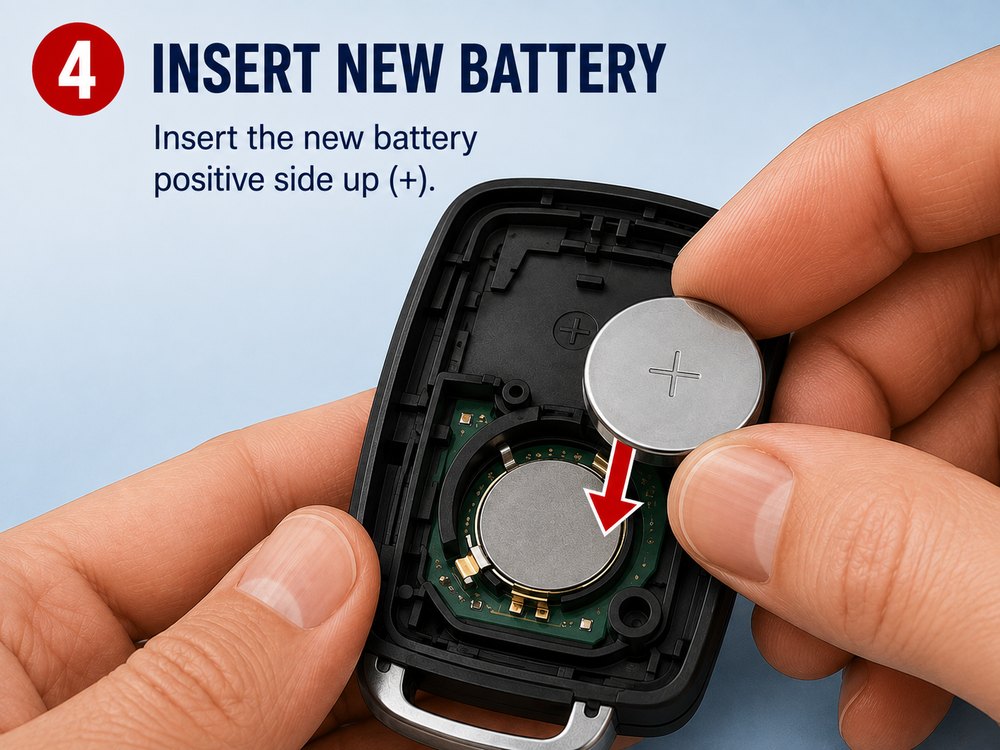
Insert the new battery.
Drop the fresh cell in positive side up (+) — the same way the old one sat — and press it home until it seats. Then click the case shut and test every button. Most fobs keep their programming.
Still not working?
If a fresh, correctly-seated battery changes nothing, it isn’t the battery — it’s the fob or the car. Doors work but the engine won’t start points to the immobilizer. How to tell →
More detail — how to tell it’s the battery, opening a proximity fob, driving on a dead fob — is below.
A dying key fob battery usually announces itself gradually — you have to stand closer to the car for the buttons to work, then closer still. Replacing it takes a couple of minutes and a coin cell from any supermarket. In most cases the fob keeps its programming, so no reprogramming is needed afterwards.
How to tell it’s the battery
Fob batteries rarely die all at once. The pattern is usually distance.
First you notice the car doesn’t respond from across the car park the way it used to. Then it takes two presses. Then you’re standing next to the door. Then nothing.
That gradual shrinking range is the signature, and it’s what separates a battery from most other faults. A fob that worked perfectly yesterday and does nothing at all today is more often a broken fob than a flat one — though a battery can fail suddenly in the cold.
Some vehicles help by putting a low key battery message on the dash. If yours has, believe it.
Two quick checks before you buy anything:
Try your spare. If the spare works normally from a distance, the first fob is the problem. If both are weak, look at the car.
Check the temperature. Coin cells lose output in the cold. A fob that’s marginal in July can be useless in January — which is a sign the battery was already on its way out.
Which battery your fob takes
Almost all use a coin cell — a flat round battery a bit smaller than a penny. The most common are CR2032, CR2025 and CR2016. They look nearly identical and differ mainly in thickness, so the number matters.
The reliable way to know: open the fob and read the old one. The number is printed on the face. Failing that, the owner’s manual usually specifies it.
They’re sold in supermarkets, pharmacies, hardware stores and petrol stations. Any brand is fine.
One serious note. These batteries are a genuine danger to small children. Swallowing one can cause severe internal injury quickly, and it doesn’t take a large battery to do it. Keep the old one out of reach from the moment it comes out, and dispose of it properly rather than leaving it on a worktop.
Opening the fob without breaking it
Most fobs split along a seam around the edge, and most have a small notch designed as the entry point.
Find the notch. Usually on an edge or an end, sometimes hidden under the keyring loop.
Use something thin and blunt. A small flathead screwdriver or a coin. Twist rather than lever — you want the halves to separate, not to bend.
Check for a screw first. Some fobs have a tiny Phillips screw, occasionally under a sticker or a badge. Prying one of those open breaks it.
On proximity fobs, look for the blade release. Most contain a hidden mechanical key. Sliding it out often exposes the screw or the seam.
Note which way the battery sits before you remove it. Almost always the printed side faces up, but look before rather than after.
Avoid prying near the buttons — the contacts underneath are delicate and it’s the easiest part to damage.
No, you don’t need to reprogram it
This one costs people money for no reason.
In most vehicles the fob’s programming is stored in memory that doesn’t depend on the battery, so it survives the swap. Put the new cell in, close the case, and it works.
There are exceptions, and a few models want a simple resynchronisation — usually pressing a button a few times or cycling the ignition, described in the owner’s manual. That’s a procedure you can do yourself, not a service call.
If someone tells you a battery change requires professional reprogramming, ask which procedure and why.
If your fob does need resynchronising and the procedure in your manual doesn’t take — you follow it correctly and the buttons still don’t respond — the problem isn’t the battery any more. Either the fob has lost its pairing with the car or something in the fob itself has failed. At that point it’s a programming or replacement job rather than a resync.
A dead battery and you need to drive now
Two things are usually still available.
The hidden mechanical blade. Most proximity fobs contain one. Slide the catch, pull it out, and it opens the driver’s door.
The low-power fallback. Many vehicles let you hold the fob against a specific spot — often on the steering column or the start button itself — so the car can read it at almost no power. The location varies by manufacturer and is in your manual. Our guide to smart and proximity keys covers how this works and why these keys need a battery when older ones don’t.
Worth finding that spot on a calm afternoon rather than in a dark car park.
When a new battery doesn’t fix it
If a fresh battery, correctly seated, changes nothing, it wasn’t the battery.
The usual suspects are a damaged fob — water, impact, or a failed board — or something on the car’s side. If the doors respond but the engine won’t start, that points at the immobilizer rather than the fob’s radio, and our guide to how car immobilizers work covers how to tell the difference.
If the fob itself is finished, replacing it is the next step — and it’s considerably simpler while you still have a working key.
Frequently asked questions
How do I know if my key fob battery is dying?
The range shrinks gradually. You start needing to be closer to the car, then closer still. A sudden total failure is more often a broken fob than a flat battery.
What battery does my key fob take?
Most take a CR2032, CR2025 or CR2016 coin cell. They look similar and differ in thickness, so open the fob and read the number on the old one.
Do I need to reprogram my key fob after changing the battery?
Usually not. Most fobs keep their programming through a battery change. A few models need a simple resynchronisation you can do yourself, described in the owner's manual.
How do I open my key fob?
Most split at a seam with a notch as the entry point — twist gently with a coin or small flathead. Check for a hidden screw first, and on proximity fobs remove the emergency blade, which often exposes the fastening.
Can I start my car if the fob battery is dead?
Often, yes. Many vehicles have a low-power position where the car can read the fob with almost no charge, and most proximity fobs contain a mechanical blade for the door. The location is in your owner's manual.
My key fob still doesn't work with a new battery. What now?
Check the battery is the right type and seated the correct way up. If it is, the fault is the fob or the vehicle. Doors working but no engine start points toward the immobilizer rather than the fob.
Is it safe to leave the old battery lying around?
No. Coin cells cause serious injury if a small child swallows one. Keep it out of reach immediately and dispose of it properly.
Can a store change my key fob battery for me?
Some auto parts stores will, though it varies by location and none advertises it as a standard service. It's also a two-minute job you can do yourself with a coin cell from any supermarket, which is often the simplest fix. Which chains do what is covered in our guide to what each option can actually do.
More guides
- Who Can Replace a Car KeyWhat parts stores, kiosks, hardware chains and dealers can each actually do.
- Car Key Replacement CostThe five things that move the number.
- Car Key ImmobilizerThe system that decides whether your engine starts.
- Transponder KeysThe chip, and why cloning isn’t programming.
- Smart / Proximity KeysThe key that needs a battery.
- Broken Key ExtractionWhat works at home and what makes it worse.
- Keyless Car TheftWhere to keep your keys, and whether Faraday pouches actually work.
- Ignition Switch SymptomsWhich of four parts is actually failing — and which a locksmith fixes.